

Key Takeaways
- Movies set in Mexico City showcase the city’s culture and contradictions, making it an essential backdrop for storytelling.
- Films like Amores Perros and Roma emphasize location as more than just a setting; they reveal deeper narratives about society.
- Travelers can explore key filming locations to enrich their understanding of these movies and the city itself.
- Mexico City food shows and movies set in Mexico City highlight its culinary scene and how it reflects cultural identity, further enhancing the travel experience.
- Watching these films and shows prepares visitors for a more meaningful exploration of Mexico City’s vibrant landscape.

Mexico City has one of the richest on-screen lives of any city in the world — and the movies set in Mexico City earn that distinction. Iñárritu didn’t just shoot Amores Perros here; the city is the engine of the film. Cuarón didn’t reconstruct his childhood street for Roma as an act of nostalgia — he did it because the street, and the neighborhood around it, contained the whole argument. The Mexico City films that followed have worked the same way: location isn’t backdrop, it’s meaning. Add in a wave of food shows that treat CDMX as the culinary capital it actually is, and you have one of the great set-jetting opportunities available to any traveler willing to do the homework. This is that homework. Watch these before you go, and you’ll arrive knowing where to walk, where to eat, and what you’re actually looking at when you get there.


What makes it essential: One of the defining Mexico City films of the last 25 years, Iñárritu shot on location throughout the city, and you can feel it — the traffic, the noise, the density, the desperation all read as documentary truth. The film introduced the world to a new Mexican cinema and launched the careers of Iñárritu, Gael García Bernal, and screenwriter Guillermo Arriaga. But more than its cultural significance, it’s just relentlessly gripping filmmaking. Watch it before you visit and the city’s contradictions — wealth and poverty sharing the same sidewalk — will suddenly make a different kind of sense.
Experience the Film in CDMX:
Colonia Roma — Iñárritu filmed extensively here, and the neighborhood’s mix of crumbling grandeur and street-level hustle is exactly the texture of the film. Walk Álvaro Obregón or Orizaba on a weekday morning when the market stalls are setting up and the traffic is already impossible, and you’re in the film’s world.
Viaducto Miguel Alemán — The car crash that links all three stories was filmed on and around this elevated highway. You won’t want to linger, but driving it at night — the city sprawling in every direction, the speed, the anonymity — gives you an immediate sense of why Iñárritu chose it as the film’s hinge point.
Mercado de Medellín — The street-level commerce, noise, and density of this Roma Norte market captures the working-class city that two of the film’s three storylines inhabit. Go for breakfast, watch the vendors, and think about El Chivo navigating these streets with his dogs.

What makes it essential: Before it becomes a road movie, Y Tu Mamá También is one of the most revealing movies set in Mexico City. The film opens in Mexico City before the road trip begins, and those early scenes establish everything — the boys’ wealthy Pedregal bubble, the political protests they drive past without noticing, the maids and drivers who make their lives frictionless. Cuarón shoots it all with a restless, handheld intimacy that feels improvised even when it isn’t. It’s the rare road movie where the destination matters less than what you understand by the time you arrive.
Experience the Film in CDMX:
Pedregal de San Ángel — The affluent southern neighborhood where the boys live, all walled compounds and private pools, is exactly the Mexico City the film critiques. Drive through it and then walk ten minutes to the surrounding streets and the contrast Cuarón is talking about becomes immediately visible.
UNAM Campus — One of the great public universities in the world and a UNESCO World Heritage Site, UNAM is where the boys’ political awakening should have happened but didn’t. The Diego Rivera murals on the library exterior alone are worth the trip — they’re a visual essay on exactly the Mexico the film’s narrator keeps describing.
Cineteca Nacional — Mexico City’s extraordinary film archive and cinema complex regularly screens classics of Mexican cinema, including Cuarón’s work. Catching a film here — in a city that takes cinema seriously — is the right way to close out a day spent set-jetting through the film’s locations.
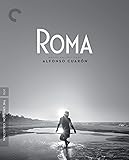
What makes it essential: Among the movies set in Mexico City, Roma may be the most personal —Cuarón reconstructed his childhood street — Calle Tepeji in Colonia Roma — with obsessive accuracy, and the result is a film that feels less like cinema and more like recovered memory. But Roma isn’t nostalgic. It holds the Corpus Christi massacre of 1971, the earthquake-like ruptures in the family’s life, and the quiet violence of a class system that persists in Mexico City to this day. Watch it and then walk Roma Norte, and you’ll see both the beauty Cuarón preserved and the inequalities he couldn’t look away from.
Experience the Film in CDMX:
Calle Tepeji, Colonia Roma — Cuarón filmed on the actual street where he grew up, and it’s remarkably unchanged. Walk it slowly. The long take of the car trying to squeeze into the narrow garage — one of the film’s great comedic moments — will make complete sense the second you see the street’s proportions.
Colonia Roma Norte — The neighborhood has gentrified significantly since the 1970s, but the bones are the same: wide tree-lined streets, art nouveau architecture, the neighborhood market, the corner pharmacy. Walk it on a Sunday morning when it’s quiet and you’re as close to the film’s atmosphere as you’ll get.

What makes it essential: Instructions Not Included brings something different to the list of movies set in Mexico City — Derbez is one of the biggest stars in Latin America and this film explains why — he has a physical comedy gift that translates across languages and a dramatic range that catches you completely off guard. The film’s portrait of Mexican family life, of the chaos and love and obligation that bind people together across borders, resonates precisely because Derbez isn’t playing it for an American audience. He’s playing it true.
Experience the Film in CDMX:
Coyoacán — The historic neighborhood where the film’s warmest scenes are set still has exactly the energy Derbez was after: cobblestone streets, street food vendors, artisan markets spilling onto the sidewalks, families out on Sunday afternoons. The Jardín Centenario at its center is one of those places where Mexico City feels uncomplicated and joyful.
Parque México, La Condesa — The lush, oval park that appears in the film’s quieter family moments is genuinely one of the best places in the city to watch Mexican family life in action. Weekend mornings are perfect: children, dogs, food vendors, and an atmosphere of collective contentment that the film
Mercado de Coyoacán — The covered market where you can eat your way through traditional Mexican cooking — tostadas, enchiladas, fresh juices — while surrounded by exactly the kind of cheerful, chaotic domestic energy the film celebrates. Go hungry.captures well.

What makes it essential: Frida earns its place among movies set in Mexico City because Taymor and Hayek give you the real woman. Kahlo is one of those figures whose image has been so thoroughly commodified — the unibrow, the flowers, the Frida tote bags — that it’s easy to forget how radical her actual life and work were. Taymor and Hayek give you the real woman: politically committed, sexually complicated, in chronic pain, and ruthlessly clear-eyed about her own mythology. Watch this before visiting Casa Azul and you’ll arrive with the right questions.
Experience the Film in CDMX:
Casa Azul, Coyoacán — The cobalt-blue house where Kahlo was born, lived most of her life, and died is now the Frida Kahlo Museum, and it’s one of those rare places where the biography and the art collapse into each other completely. Her wheelchair is still there. Her corsets. Her medicine cabinet. For an experience beyond the standard visit, our Exclusive Experiences Edit details how to arrange an after-hours private tour — the museum in near-silence is something else entirely.
Museo Mural Diego Rivera — Houses Rivera’s famous mural Sueño de una Tarde Dominical en la Alameda Central, which contains portraits of nearly every significant figure in Mexican history including Kahlo herself. Standing in front of it after watching the film, you’ll spot faces you now recognize.
Mexico City Documentaries: The Stories Behind the City
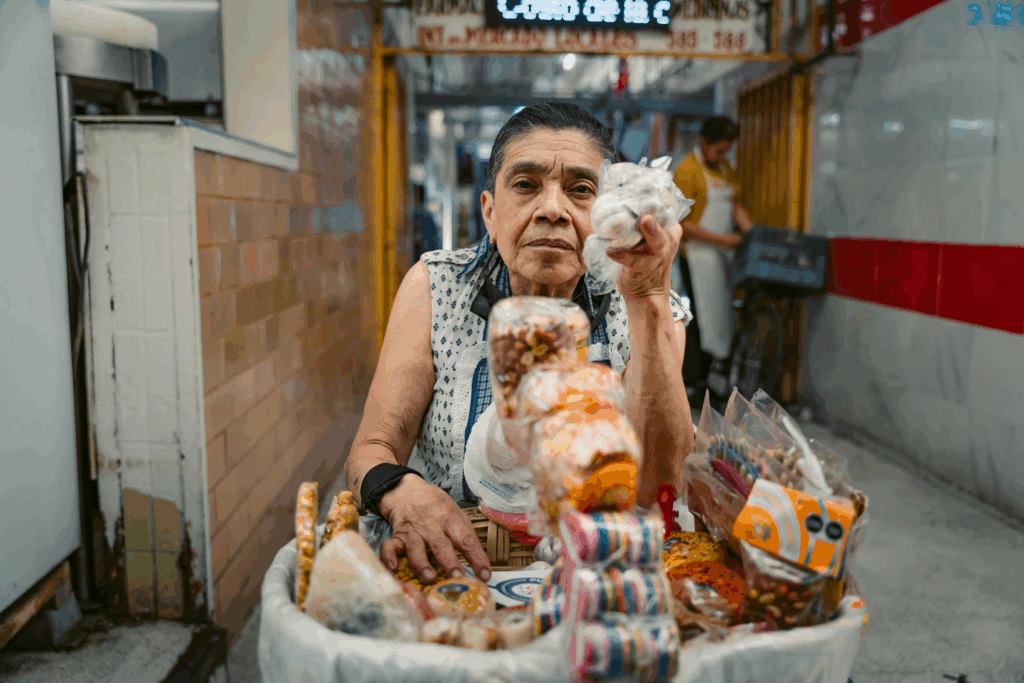

What makes it essential: Hecho en México doesn’t fit neatly alongside the other movies set in Mexico City on this list — it’s not narrative filmmaking, it’s something closer to a musical argument for an entire country. Bridgeman doesn’t flatten it into tourist-friendly mariachi — he goes deep into the regional styles, the indigenous traditions, the contemporary artists building on all of it. Watch it and you’ll hear Mexico City differently: the music coming from the taquería, the busker in the Metro, the quinceañera spilling out of a neighborhood hall. It was there all along.
Experience the Film in CDMX:
Plaza Garibaldi — The spiritual home of mariachi in Mexico City, where dozens of bands in full charro regalia play simultaneously and you can hire one to serenade your table. It’s loud, chaotic, and completely alive. Go at night, order a tequila, and let it wash over you. The film will make more sense afterward, or the plaza will. Both.
Palacio de Bellas Artes — Mexico’s premier cultural venue hosts the Ballet Folklórico de México, a performance that traces the country’s regional dance and music traditions with extraordinary precision and spectacle. It’s the theatrical counterpart to what Bridgeman documents on the street, and one of the great performances you can see in Latin America.
Xochimilco — On weekend afternoons the canals fill with trajineras carrying families, and competing boats of mariachi, marimba, and cumbia musicians drift alongside offering to play for tips. It’s festive, chaotic, and deeply Mexican in a way that no museum can replicate. The film’s thesis — that music is the connective tissue of Mexican identity — makes complete physical sense here.
A Tale of Two Kitchens | Director: Trisha Ziff | 2019 | Netflix
A short documentary — barely an hour — about two restaurants connected across the US-Mexico border: Contramar in Roma Norte and Cala in San Francisco, both run by chef Gabriela Cámara. But Ziff uses the kitchens as a lens for something larger: immigration, identity, who gets to cross borders freely and who doesn’t, and the quiet political act of feeding people well. It’s the most quietly radical food documentary you’ll watch this year.
What makes it essential: A Tale of Two Kitchens sits at the quieter end of the movies set in Mexico City spectrum — barely an hour, no car crashes, no earthquakes — but Ziff uses Contramar as a lens for something genuinely political. Cámara is an extraordinary subject — intellectually rigorous, politically engaged, and genuinely obsessed with the dignity of her kitchen workers. The film spends as much time with the line cooks and dishwashers as with the chef, and that choice says everything about its values. It also makes you desperately hungry. The tuna tostada at Contramar has its own small mythology by the end, and justifiably so.
Experience the Film in CDMX:
Contramar, Roma Norte — You’re going. The tuna tostada — half chipotle, half salsa verde — is one of those dishes that becomes a reference point. Book ahead, go for a long lunch, order the whole grilled fish if you can. This is the restaurant that made Roma Norte a culinary destination, and it still earns every reservation.
Roma Norte — Wander the neighborhood before or after lunch. The streets around Contramar are exactly the gentrified-but-still-real Mexico City that the documentary’s tension is about: beautiful, expensive, and increasingly inaccessible to the workers who make it run. The film gives you eyes to see what’s happening here.
Mercado Medellín — A few blocks from Contramar, this traditional covered market is the culinary counterweight: the ingredients, the vendors, the unfussy cooking that predates and will outlast every trendy restaurant. Buy something, eat standing up, and think about what Cámara is actually trying to preserve.
Ciudad Herida | Director: Santiago Arau Pontones | 2019 | YouTube
On September 19, 2017, a 7.1 magnitude earthquake killed more than 300 people in Mexico City and collapsed dozens of buildings. What happened next became the story: within hours, tens of thousands of ordinary residents — not the government, not the army — were in the rubble with their hands, organizing rescue operations with no direction from above. Arau Pontones filmed it all. The title means Wounded City, and it earns every word.
What makes it essential: Ciudad Herida is the only entry in this set-jetting Mexico City guide that was made in real time, with no distance between the camera and the disaster. This documentary is about disaster but it’s really about solidarity — the specific, fierce, neighborhood-level solidarity that Mexico City residents call chilango identity. The images of human chains passing rubble bucket by bucket, of strangers sleeping in the street to guard rescue sites, of a city that refused to wait for permission to save itself, are genuinely moving. It will change how you see the people you pass on the street when you visit.
Experience the Film in CDMX:
Centro Histórico — Walk the historic center and look up. You’ll see restored facades alongside newer construction, the seams of the rebuild still visible if you know what you’re looking for. The 2017 earthquake was not the city’s first — the 1985 quake killed thousands — and the Centro carries both histories in its walls.
Colonia Condesa and Roma — These two neighborhoods suffered significant damage in 2017 and their recovery is visible in the mix of restored art deco buildings and newer infill construction. Walk the streets between Parque México and Parque España and you’re walking the geography of the documentary’s most affecting sequences.
Parque México — The park became a spontaneous coordination point during the rescue operations, and locals still gather here in the way that communities do after shared trauma. Sit on a bench on a weekend afternoon and watch the neighborhood that rebuilt itself around this green space. The film gives it a different weight.

What makes it essential: The production values are high and the locations are genuinely spectacular — Teotihuacán, the Palacio Nacional, the Centro Histórico, Oaxaca. Greenberg is a skilled interviewer who knows when to push and when to let the silence do the work. Watch it as an introduction to Mexico’s monumental history and official self-image, then layer everything else on the watchlist on top of it. The contrast between the presidential tour and Iñárritu’s street-level CDMX — two very different movies set in Mexico City’s orbit — is its own kind of education.
Experience the Film in CDMX:
Palacio Nacional, Zócalo — The president’s starting point and the symbolic heart of Mexican political power. Inside, Rivera’s epic mural cycle The History of Mexico covers the entire stairwell — conquest, colonialism, revolution, modernity — in overwhelming detail. Stand at the base of the stairs and look up. It’s the country’s official story told by its greatest muralist, and it’s extraordinary.
Templo Mayor — Directly adjacent to the Zócalo, the excavated ruins of the Aztec capital Tenochtitlan sit in the middle of the modern city like a wound that never fully closed. The museum beside it houses the enormous Coyolxauhqui stone and explains, better than almost anywhere else in the city, what was here before the Spanish arrived and what was deliberately built on top of it.
Teotihuacán — An hour outside the city but unmissable. The Avenue of the Dead, the Pyramid of the Sun, the Pyramid of the Moon — these are among the most significant pre-Columbian structures in the Americas, and the film gives you the presidential perspective. For something that will stay with you longer, our Exclusive Experiences Edit has details on a sunrise hot air balloon ride over the site. Seeing it from the air at dawn, before the crowds arrive, is another thing entirely.
Mexico City Food Shows Worth Watching: Exploring Mexico City’s Culinary Scene
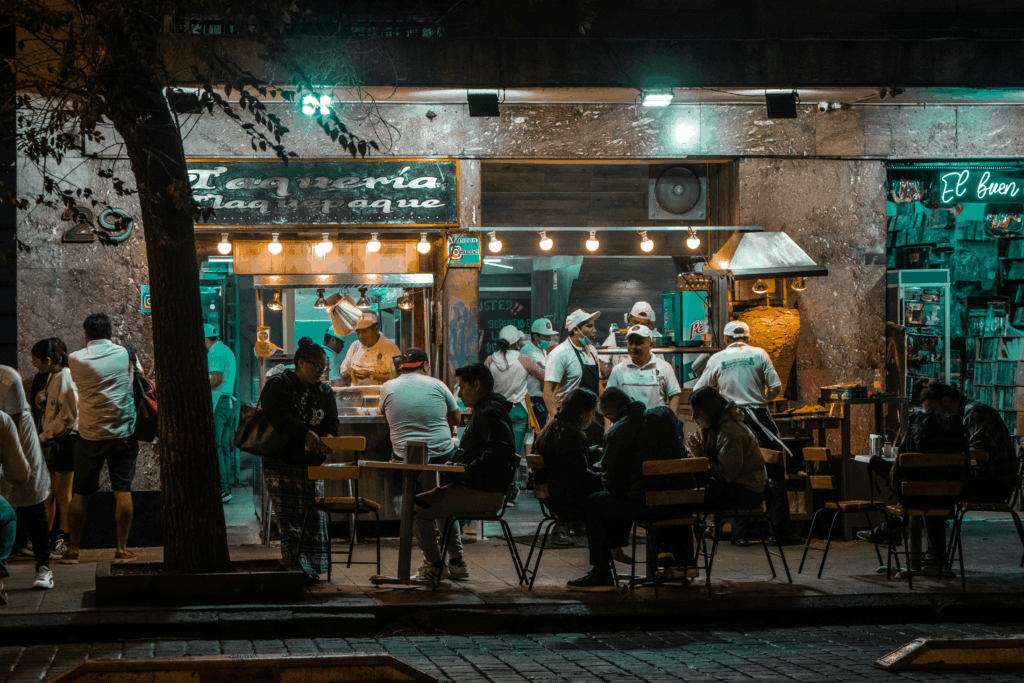
Parts Unknown: Mexico City | Host: Anthony Bourdain | Season 8, Episode 4 | 2014 | Max
Bourdain understood Mexico City the way he understood all great cities — as a place best entered through its cheapest, most unguarded food. This episode moves from market stalls to mezcal bars to a late-night taco stand with a line around the block, and Bourdain does what he always did best: gets out of the way and lets the city speak. There’s a sequence at a pulquería that alone justifies the watch.
What makes it essential: The best Mexico City food shows earn their place by treating the city as a culinary civilization rather than a destination. Bourdain’s Mexico episodes are among the best things he ever made — he loved the country with a specificity that went beyond food tourism. This episode captures a CDMX that’s simultaneously ancient and frantically contemporary, and his conversations with chefs and street vendors and locals contain more honest cultural observation than most travel documentaries three times its length. Watch it and then go find every place he visited.
Taste the City:
El Hidalguense — The barbacoa destination Bourdain visits, where lamb is slow-cooked overnight in underground pits and served on weekends only, when the pots are opened. Arrive early — it sells out. This is not a restaurant in any conventional sense; it’s a ritual, and Bourdain recognized it as such.
A pulquería in Colonia Roma — Pulque, the ancient fermented agave drink that predates tequila by centuries, is having a revival in CDMX and Roma is where you’ll find the best bars serving it. La Hija de los Apaches and El Nivel are good starting points. Order the natural and then a cured variety and let the bartender explain the difference.
Mercado de Coyoacán — Bourdain visits and it remains one of the best places in the city to eat without a reservation, a plan, or a budget. The tostada stalls in the back are the move.
Somebody Feed Phil: Mexico City | Host: Phil Rosenthal | Season 2, Episode 1 | 2018 | Netflix
Where Bourdain was cool, Rosenthal is unabashedly, embarrassingly enthusiastic — and in Mexico City, that turns out to be exactly the right register. He eats everything with the unbridled joy of someone who genuinely cannot believe his luck, and watching him discover CDMX’s food scene for the first time is infectious. The episode is also quietly excellent on the city’s dining culture: why Mexico City has more restaurants per capita than almost anywhere on earth, and what that says about how its residents live.
What makes it essential: Rosenthal gets access that a more detached journalist wouldn’t — people open up to his enthusiasm. His meal at Contramar, his market wandering, his genuine distress at having to leave all function as an argument that Mexico City might be the greatest food city in the world right now — which, paired with the movies set in Mexico City on this list, makes CDMX one of the most compelling destinations you can plan.. The episode also ages beautifully: every place he visits is still worth going to, which is not always true of food television.
Taste the City:
Contramar — Phil’s Contramar meal is a highlight of the entire series, not just this episode. The tuna tostada, the grilled fish, the long lunch atmosphere of a room full of people who have nowhere else to be — book well ahead and clear your afternoon.
Lalo! — The beloved Condesa breakfast spot Phil visits remains exactly what it was: relaxed, ingredient-focused, unpretentious, and reliably excellent. Go for huevos and coffee on a slow morning and watch the neighborhood wake up around you.
Mercado de San Juan — Not in the episode but the natural next step after watching it: this covered market in the Centro is where CDMX’s serious home cooks and chefs shop, with vendors selling imported cheeses, fresh seafood, exotic meats, and produce you won’t find anywhere else. It’s a food lover’s detour that Phil would absolutely approve of.
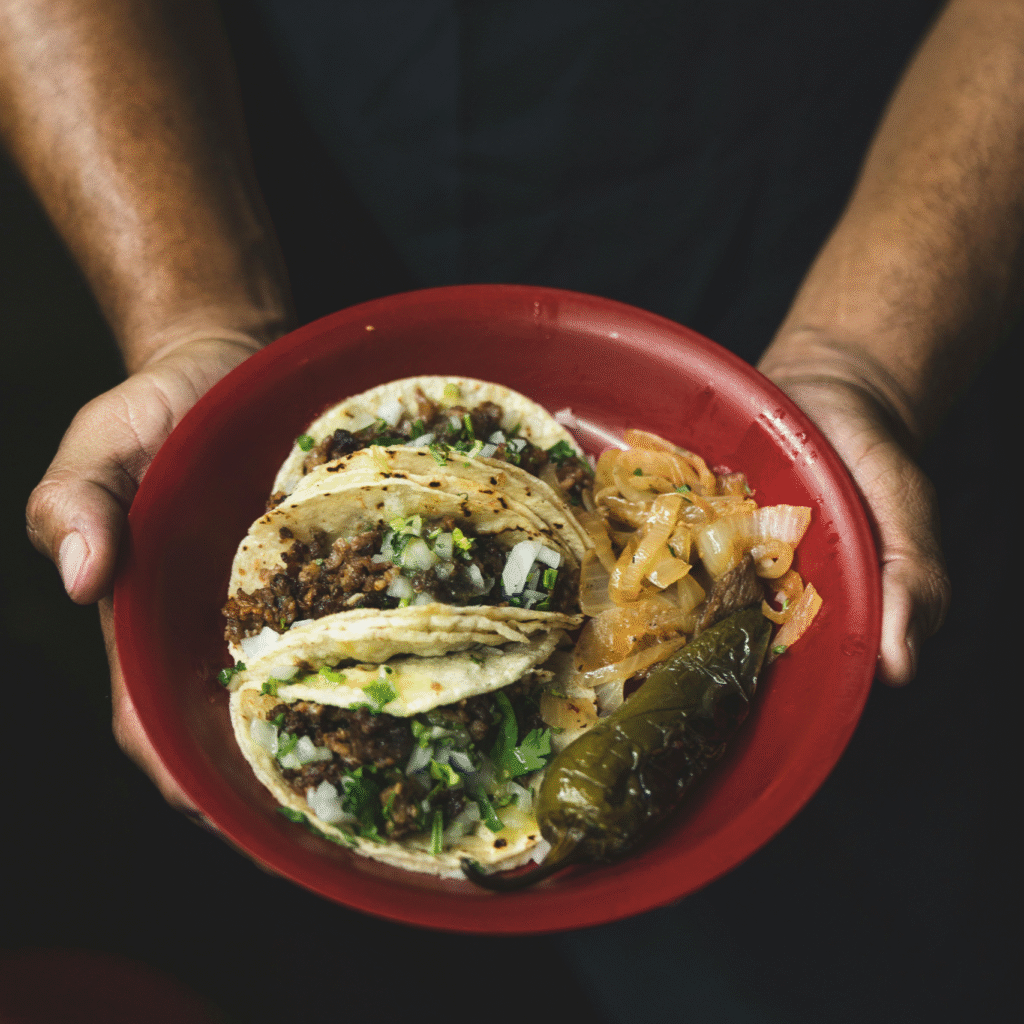
Chef’s Table: Enrique Olvera | Host: Enrique Olvera | 2016 | Netflix
Olvera is the chef who changed what Mexican fine dining could be — not by Europeanizing it but by going deeper into Mexican culinary tradition than anyone had before him. This Chef’s Table episode traces his path from a technically trained young chef who felt fraudulent cooking French food to the creator of Pujol, consistently ranked among the best restaurants in the world. The mole madre — a mole that has been continuously cooking for years, with new mole added daily — is his signature dish and his philosophy made edible.
What makes it essential: The episode is really about identity — what it means to cook your own culture seriously, without apology, at the highest level. Olvera’s story runs parallel to a larger shift in how Mexico City sees itself — and it’s the kind of context that makes set-jetting Mexico City feel less like tourism and more like genuine understanding. Watch it and your meal at Pujol, if you can get a reservation, becomes a conversation rather than just dinner.
Taste the City:
Pujol, Polanco — Reservations open weeks in advance and fill immediately. The tasting menu built around the mole madre is the move, but the taco omakase bar is a more accessible entry point and genuinely extraordinary in its own right. Either way, this is one of the great restaurant experiences available anywhere in the world right now.
Eno — Olvera’s more casual spot, focused on exceptional ingredients treated simply. It’s the right answer to the question of what to eat when you can’t get into Pujol but still want to understand what he’s doing.
Mercado de San Juan — The ingredients that define Olvera’s cooking — heirloom corn, local chiles, seasonal produce with genuine provenance — are all here in their raw form. Walking it before or after watching the episode gives you the foundation of what he’s building on.
Street Food: Latin America – Mexico City | Director: Brian McGinn | Season 1, Episode 1 | 2020 | Netflix
The first episode of the Latin America season and one of the best things Netflix has produced about food anywhere. The subject is doña Alejandra Gracia, who has been making tlayudas and other Oaxacan dishes from a street stall in CDMX for decades, and the film is really about what it costs to feed a city — the hours, the physical labor, the precarity, the pride. You will finish it wanting a tlayuda and wanting to leave a very large tip.
What makes it essential: Among Mexico City food shows, the Street Food episode is the template for how to treat its subjects with dignity. David Gelb’s Street Food series works because it treats street vendors as the serious culinary artists they are, and the Mexico City episode is the template. Doña Alejandra’s story — migration from Oaxaca, building a business from nothing, raising a family on the margins — is the story of CDMX itself. The food looks extraordinary, but the person is the point.
Taste the City:
Taquería El Califa de León — Featured in the episode and now holding a Michelin star, which tells you everything about how seriously Mexico City takes its taco culture. The gaonera cut, seared on a comal until the edges char, is the only thing you need to order. Arrive early or wait in line. Worth it.
El Vilsito, Narvarte — Auto repair shop by day, legendary taco al pastor stand by night. The transition happens around 9pm — the cars get pushed out, the trompo goes up, and the line starts forming. Michelin-recommended and completely unpretentious about it. Go late.
A street tlayuda stall, anywhere — The episode will send you looking for Oaxacan food in CDMX, and the city has a large Oaxacan community whose cooking you can find in markets and on street corners throughout the city. Ask locals where they go. That’s the point of the documentary.
Taco Chronicles: Al Pastor | Director: Carlos Pérez Osorio | Season 1, Episode 1 | 2019 | Netflix
The taco al pastor has Lebanese roots — it descends directly from the shawarma brought to Mexico by Lebanese immigrants in the early 20th century, the vertical spit translated into achiote-marinated pork — and this episode traces that journey with genuine historical rigor while also just being a deeply pleasurable hour of television about tacos. The trompo, the pineapple, the corn tortilla: by the end you’ll understand why al pastor is not just a dish but a civic religion in Mexico City.
What makes it essential: The Taco Chronicles takes its subject seriously without taking itself seriously, which is exactly the right tone. The al pastor episode in particular benefits from the historical context — knowing the Lebanese origin story makes the taco taste different, richer, more layered. It’s also a love letter to the taqueros themselves, the people who have been perfecting the same movements — slice, flip, catch — for decades. Watch it and you’ll never eat a taco al pastor without thinking about all of that.
Taste the City:
El Huequito, Centro Histórico — Serving tacos al pastor since 1959, which means the people behind the counter have been doing this longer than most of their customers have been alive. The original location on Ayuntamiento is the one. Order a dozen, eat standing up, don’t ask for a fork.
El Vilsito, Narvarte — Worth visiting twice: once after the Street Food episode and once after this one, because the two documentaries give you completely different lenses for the same trompo. The second visit will be better.
Any taquería with a visible trompo — The episode will train your eye to spot a well-maintained trompo, a generous pineapple, a skilled taquero. Walk the city with that knowledge and suddenly every corner taquería is an invitation to evaluate. This is a good way to spend an afternoon in CDMX.
The credits roll. The city calls.
The movies set in Mexico City have been inspiring filmmakers for a reason — it’s one of those places that simply refuses to be ignored. The contradictions are too sharp, the beauty too unexpected, the food too extraordinary, the history too layered. Every film and show on this list found something different in the same city, which tells you something about how much CDMX has to give.
The best version of this watchlist is the one you use as a travel companion: watch Roma the night before you walk Colonia Roma, queue up the Bourdain episode over breakfast before a market day, let Amores Perros disabuse you of any remaining illusions about what a sanitized travel experience would cost you here. The city rewards the prepared visitor, and cinema is one of the best ways to prepare.
We’d love to know what’s on your Mexico City watchlist — the films we missed, the Mexico City food shows that converted you, the documentary that finally convinced you to book the flight. Send us your recommendations and the best ones will appear in our next newsletter.
PLAN YOUR PERFECT CDMX TRIP
The screen time is over. Here’s how to make it real.
Ready to keep exploring?
- Read This: Books Set in Mexico City — From Octavio Paz to Elena Poniatowska, the literary companion to everything you just watched
- Mexico City Destination Guide — Where to stay, what to eat, how to navigate like a local
- Style & Packing for Mexico City — What to wear from Centro Histórico sidewalks to Polanco rooftops
- Exclusive Experiences in CDMX — Private tours, after-hours museum access, and the hot air balloon ride over Teotihuacán you’ve been thinking about since the Royal Tour
- Travel Resources for Mexico City — Trusted local guides, boutique hotels, curated Instagram accounts, and essential podcasts
And if the watchlist just moved Mexico City to the top of your travel list? Start with Roma for the soul of the city, Parts Unknown for the appetite, and Amores Perros for the reality check. Watch all three before you pack — you’ll arrive knowing exactly where you’re going.